 Back to News
Spaceium Releases OpenPort™, Making Spacecraft Refueling Technology Available to customers for $1
By Ashi DIssanayake
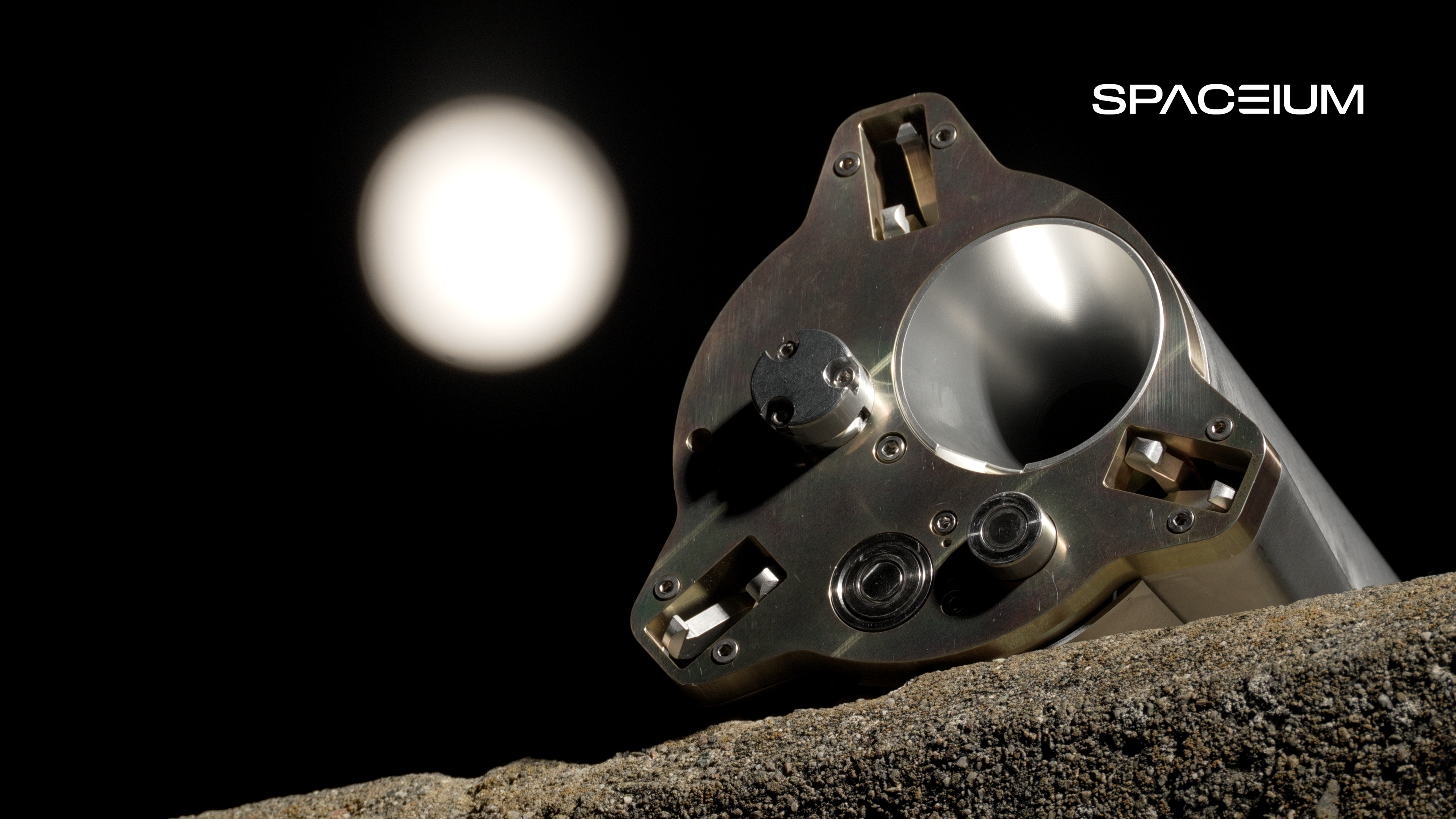
Any company can license and build the refueling port, with the first-ever xenon transfer in orbit planned aboard the International Space Station.
November 10, 2026 – Spaceium Inc., a company building fully automated refueling stations in orbit, today announced the release of OpenPort™, an open-source refueling interface that any company can license and build for just $1. The technology allows spacecraft to be designed for refueling from day one, rather than being limited to the fuel they carry at launch. Unlike conventional refueling connections, OpenPort is androgynous, meaning two spacecraft equipped with the same port can connect and transfer propellant in either direction. The interface is set to fly aboard the International Space Station as a NASA-approved external payload, where it will demonstrate the first-ever transfer of xenon in orbit. Spaceium will fly the payload through Voyager Technologies' commercial payload service.
Today, most spacecraft launch with all the fuel they will ever have. Once that fuel runs out, a satellite worth hundreds of millions of dollars can be retired or moved into a graveyard orbit, even if its electronics and other systems are still working. Refueling spacecraft in orbit has been a goal of the industry for decades, but there has never been a common interface that different companies could build around. Each company has developed its own hardware, making it difficult for one company's tanker to refuel another company's spacecraft without custom engineering. Spaceium is taking a different approach: rather than keeping its refueling interface proprietary, it is making the design available to the entire industry.
Founded by aerospace and mechanical engineers Ashi Dissanayake and Reza Fetanat, Spaceium is building a network of automated orbital refueling stations that will sell fuel as a service. The company was part of Y Combinator's Summer 2024 batch and already has commercial customers around the world, with demand coming from orbital transfer vehicles, lunar missions, launch vehicles, and geostationary satellite operators. For Spaceium, making the port widely available is a deliberate business decision. The company believes refueling in orbit will only become routine when spacecraft from different companies can use the same connection, just as cars today can refuel at gas stations regardless of who built them.
"The port isn't the business. The stations are," said Ashi Dissanayake, co-founder and CEO of Spaceium. "Every spacecraft that bolts on an OpenPort is a future customer for a Spaceium station, and if a competitor adopts it tomorrow, that is a win. Once spacecraft are designed refuelable from day one, demand for refueling follows. The standard creates the market."
OpenPort is designed to replace the conventional fill-and-drain valve used to fuel spacecraft before launch, turning a connection that would otherwise never be used again into one that remains functional in orbit. Engineered to withstand higher pressures and accommodate greater docking misalignment than any other refueling interface currently available on the market, OpenPort is built to handle two of the most demanding challenges of transferring propellant in space. Because both sides of the connection are identical, a spacecraft can receive fuel or act as a tanker itself. The $1 license allows companies to manufacture the design while maintaining a common standard, rather than creating incompatible versions. Spaceium will continue to develop and operate its own stations, robotics, and automation systems, and will provide OpenPort hardware at no cost to customers purchasing fuel from its stations.
"Every spacecraft is fueled on the ground through a valve that is never used again," said Reza Fetanat, co-founder and CTO of Spaceium. "OpenPort replaces it with one that keeps working in orbit. Two identical ports lock together and fuel flows either way, so any spacecraft can be a tanker. That is what turns a product into a network."
Spaceium has already begun demonstrating the hardware needed to make orbital refueling possible. In February 2026, the company declared its first space mission, a precision robotic actuator launched aboard a SpaceX rideshare, a success. Its next mission will take OpenPort to the International Space Station on a payload flight mission managed through Voyager Technologies, where the hardware will transfer xenon between two tanks in orbit. This demonstration is an important step toward making the transfer of propellant a routine operation in space. Spaceium's long-term vision is to establish refueling stations across low Earth orbit, geostationary orbit, and eventually along the route to the Moon. By making OpenPort available to the entire space industry, the company hopes to establish a common connection before orbital refueling becomes widespread. For satellite operators, this could mean extending the lives of spacecraft that would otherwise be retired. For orbital transfer vehicles and lunar missions, it could mean traveling farther and completing more missions without carrying all their fuel from Earth. Spaceium wants to make refueling a normal part of operating in space, so that a spacecraft's useful life is determined by what it can still do, not how much fuel it has left. The company is expanding its engineering team as it prepares for its upcoming demonstration and the launch of its first station.
For OpenPort licensing and technical inquiries: OpenPort@spaceium.com
For press inquiries, contact: founders@spaceium.com
For more information, visit: www.Spaceium.com
